This is a story I've been meaning to tell for a while but never got around to do it. I've spent almost 2 years in India and when I think back of all my adventures, this one always pushes itself to the forefront of my memories. So it's about time I write about it.
It was the spring of 2016 when I went to North India for two weeks with some friends. I've lived in South India before, but this was my first time in the North. We did the basic golden triangle things as my friends never been to the subcontinent before. Taj Mahal, Jaipur, Delhi, the basic stuff. And while they flew down to Mumbai for a while, I decided to rent a motorcycle and go up to the Himalayas as far up as I can.
Sacred mountains
The Himalayas are sacred to Hindus and looking at their majesty, it's easy to understand why. Every year millions of pilgrims embark on the Char Dham, the grueling journey to visit the four main temples in the Himalayas: Yamunotri, Gangotri, Kedarnath and Badrinath. March is not pilgrimage season which means the mountain roads are eerily quiet and most establishments catering to tourists are closed. Major pilgrimage roads, like the one to Badrinath from Joshimat are closed. It also gets really cold at night. Keeping these in mind, I decided to make my way to Tungnath, the highest Shiva temple in the world and part of the Panch Kedar.
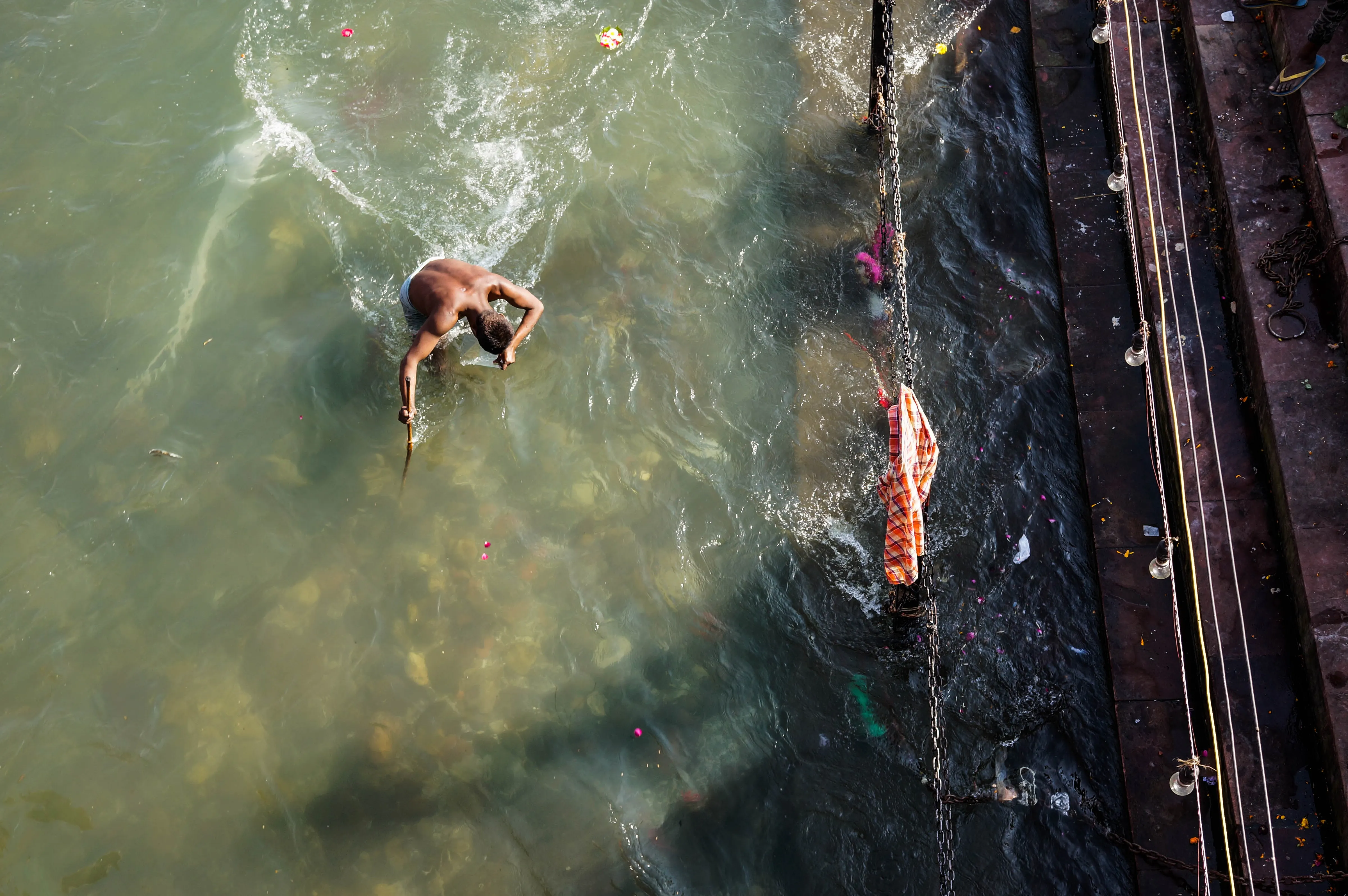
The route starts from Haridwar, the sacred place where the Ganges meets the plains and transforms from crystal clear mountain stream into the wide and life giving river of the plains. Then the road continues towards Rishikesh, the city of yogis, foreigners draped in saris and the abandoned ashram The Beatles stayed at.
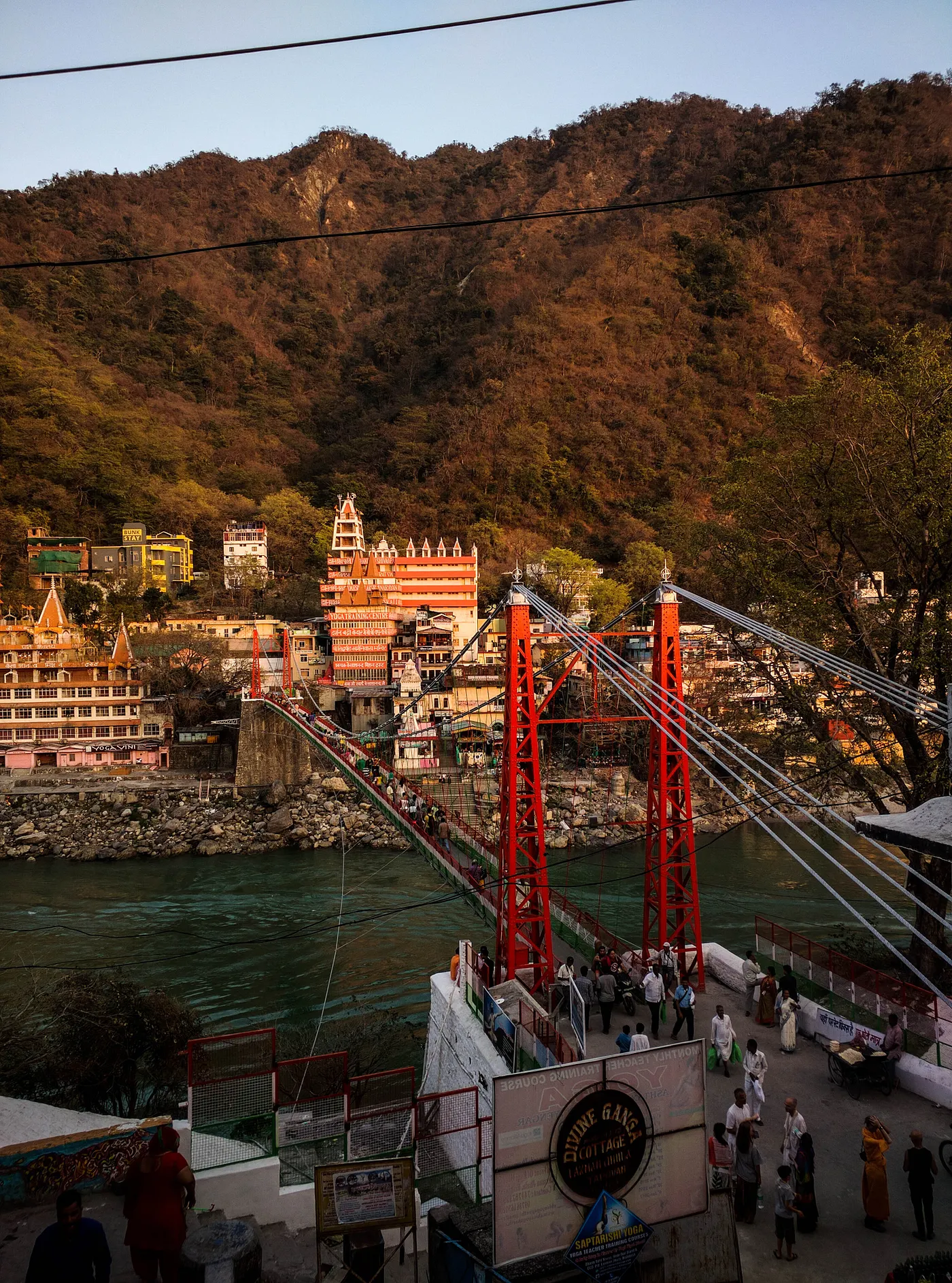
Journey to the heavens
My route led me from Joshimath back down to Gopeshwar where I turned onto the small road leading to Chopta, the village where the short trek to Tungnath temple and Chandrashila peak start from.
Leaving the shady valley floor and quickly climbing in altitude filled my heart with joy. As my motorcycle climbed up on the narrow road, villages became scarcer, people became a rare sight. Along the way I came across wild deer, grazing by the roadside. I wished my Royal Enfield wouldn't make so much damn noise. I felt that I was but a rude visitor in this, the kingdom of the gods. And my journey to the heavens just begun.
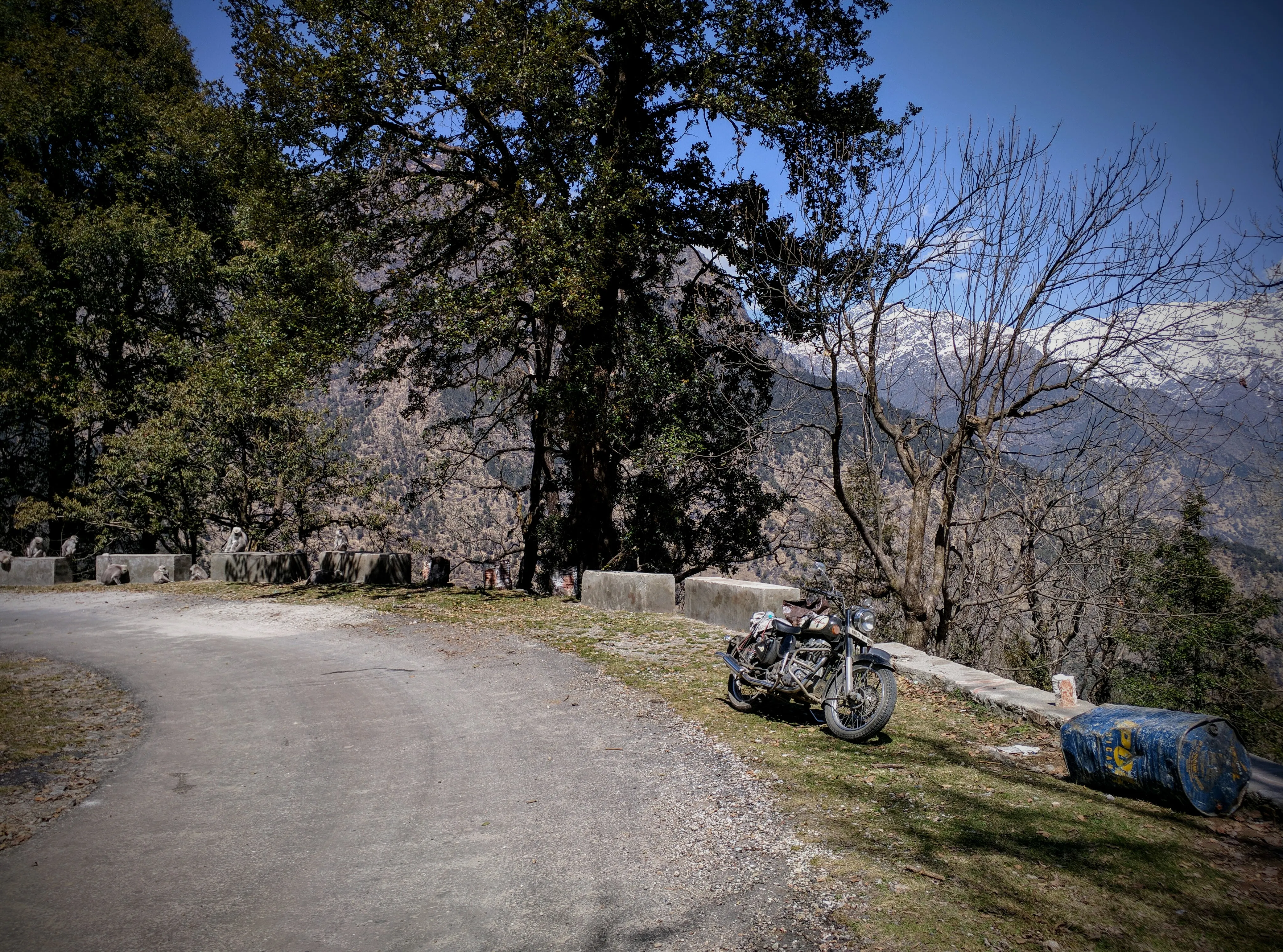
After countless hairpin turns and crossing through thick pine forests I arrived at the village of Chopta. It is a rather unremarkable collection of huts that was eerily quiet this time of the year. Chopta is at 2700m above sea level and it was my base camp for the night. By the time I arrived it was late afternoon and I had to embark on the trek fast if I wanted to get back by sunset. After luckily finding a place for the night I parked my trusted steel pack animal and set off on foot.
The climb up
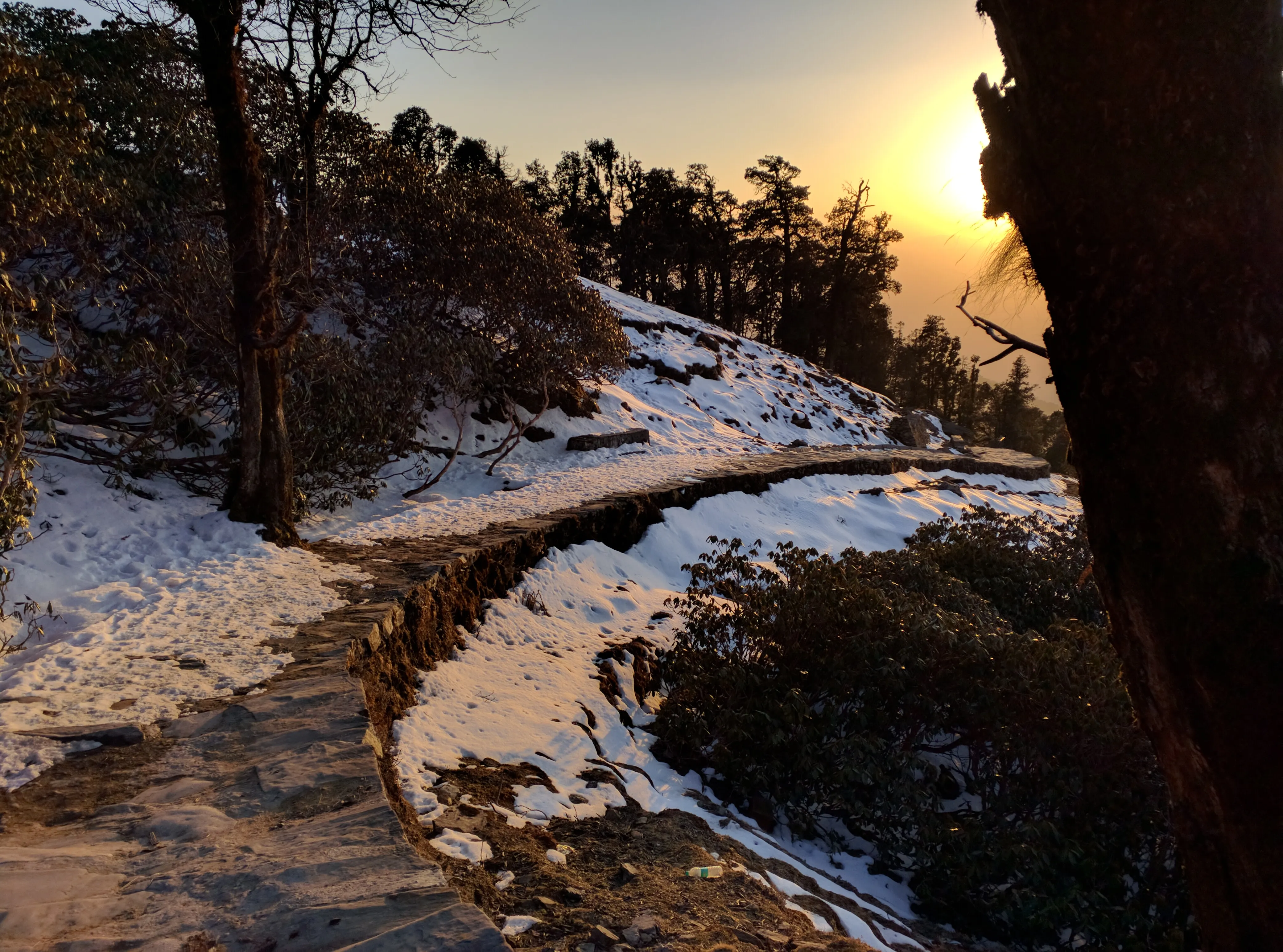
The climb up to the temple was surprisingly easy. I expected rough trails and a much longer climb based on what I read about the accessibility of other prominent temples. Which was good, because golden hour was approaching fast and I had to pick up my pace. The paved path was winding up among rhododendron trees and as I climbed higher and higher, patches of snow started to appear.
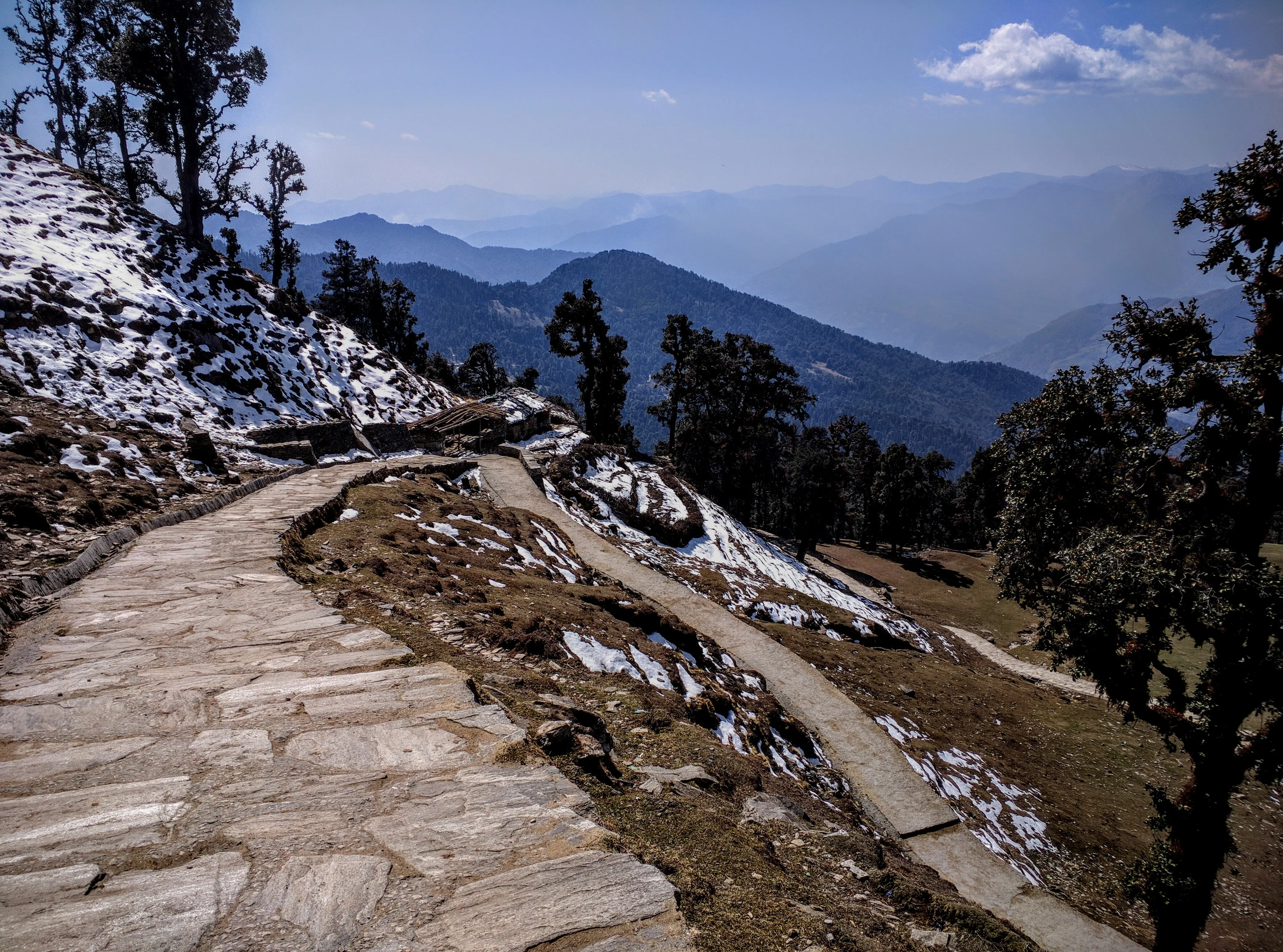
After setting sights on the temple I decided to first go on to Chandrashila Peak. This was the toughest part of the climb. The mountain face above the temple was thick with snow and I was struggling in my summer hiking shoes. The other circumstance making my ascent harder was the thin air. I've only checked the altitude after I got back down, but was astonished that I made it to 4000 meters above sea levels.
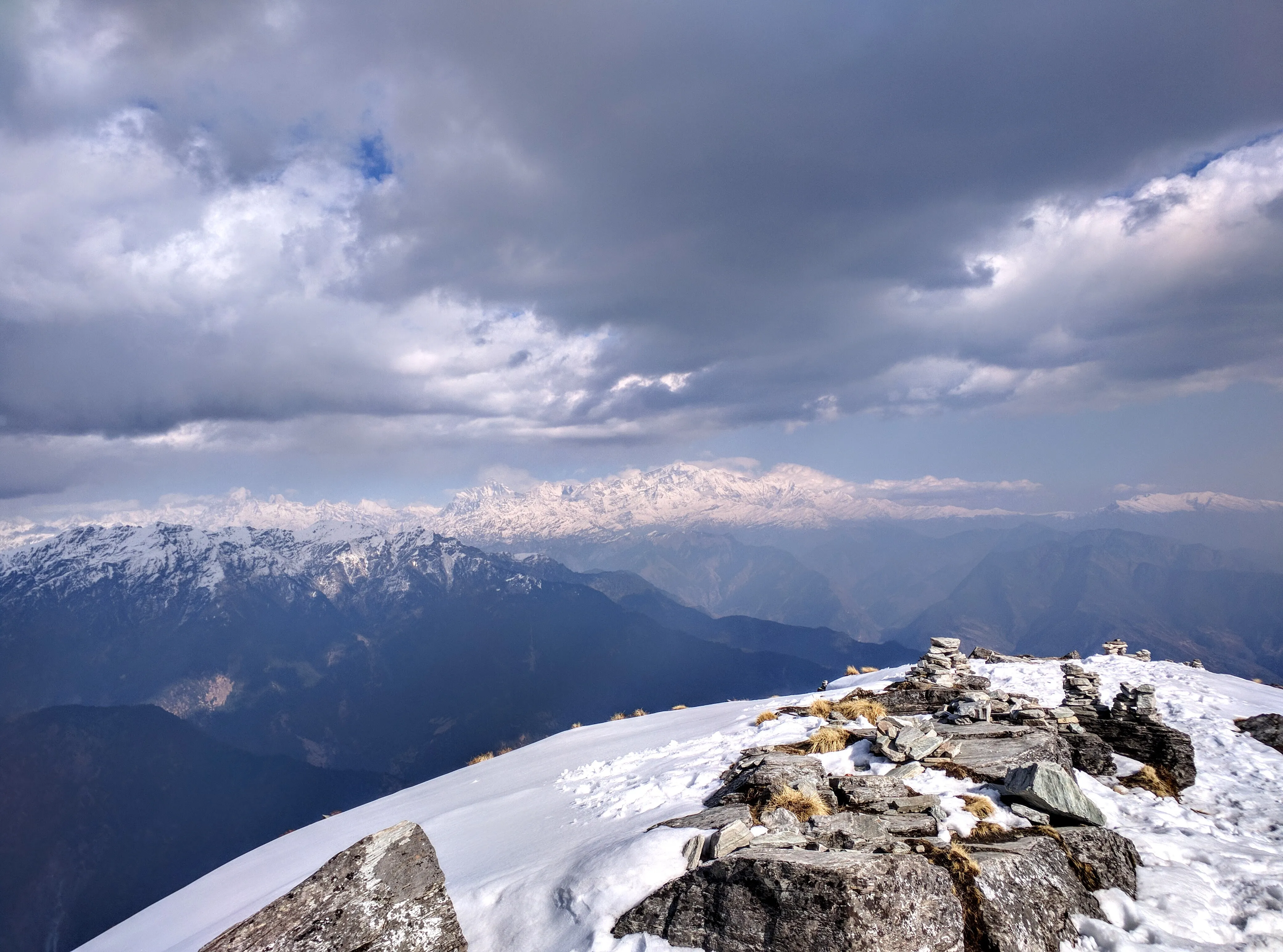
The view from the top was truly breathtaking. With the highest peaks of the Himalayas shedding their cloud shroud one can't help but feel like they are witnessing something truly majestic. Add to this the cosmic silence of the mountains only occasionally interrupted by a lone gust of wind carrying the sounds of prayer bells of all sizes from the nearby shrine.
The silent temple and the hour of gold
Tungnath is the highest known Shiva temple in the world. Legend says that the temple was built by Arjuna, the third of the Pandava brothers. Tungnath temple was discovered by the great Hindu religious preacher Adi Sankaracharya around one thousand years ago. It is the temple where during the disappearance of Lord Shiva, Bhima, the second of the Pandavas could see Shiva's hands.
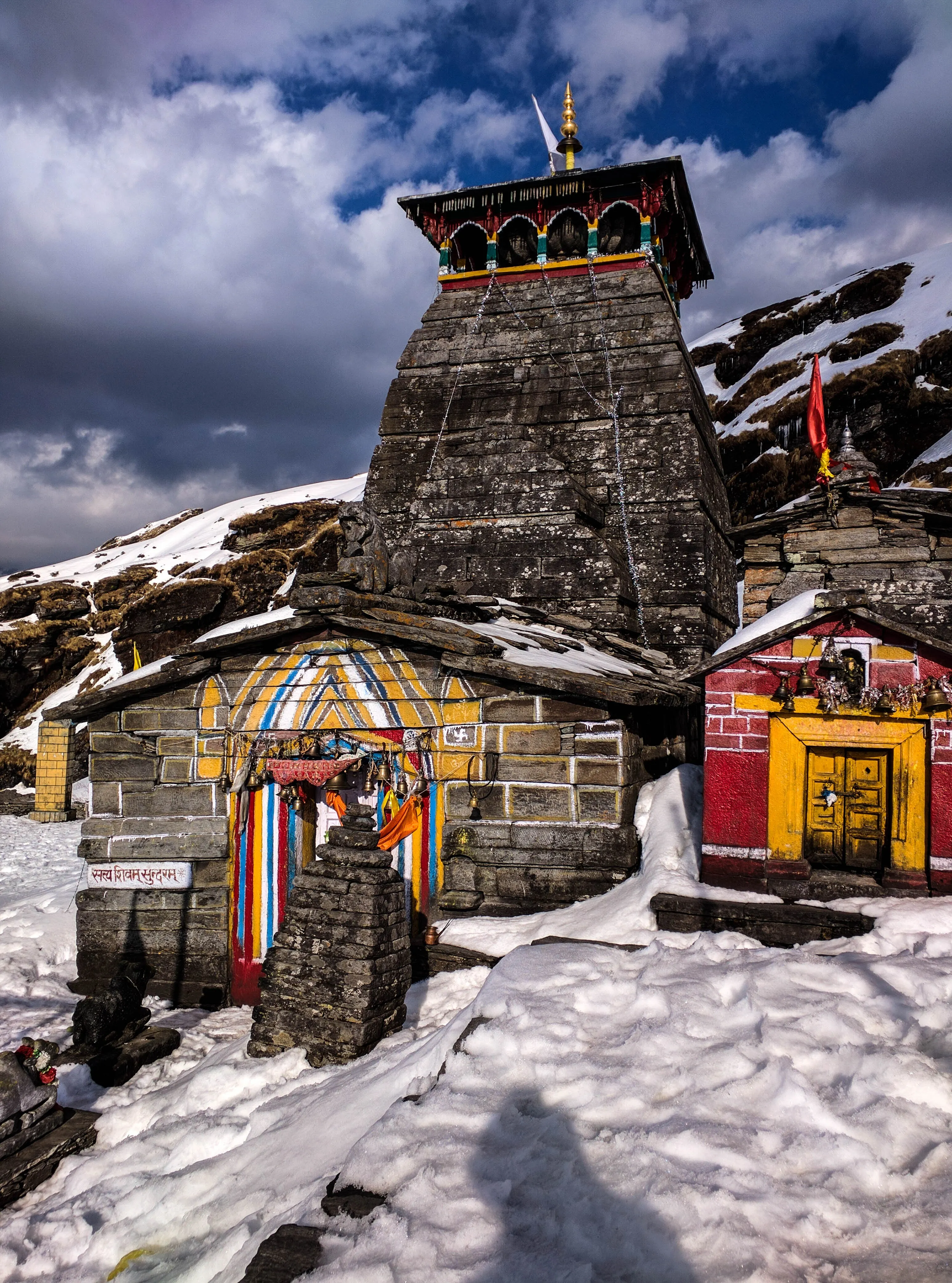
The temple itself is a rather small structure compared to other prominent religious architecture in the Himalayas. Yet it does seem ancient and is pleasantly free of modern touches that so many temples in India have to contend with. This is what happens when a religion endures over thousands of years. But here, its relative remoteness seemed to have saved it from this fate. There is a small guesthouse complex nearby for pilgrims that can't say the same thing. At the time of my visit though it was derelict. As sunset was fast approaching I had to make my way down to Chopta in the golden light.
Chopta, base camp
As I remarked earlier, Chopta is nothing more than a collection of huts. Once I got back to my room this became even more apparent. My host graciously asked me if I would like my one bucket of hot water allotted for my stay now or in the morning? After a long day in the saddle and a vigorous climb I chose to bathe that evening. Feeling clean, I made my way out to the only place to get food at for some supper.
No surprises, Maggi noodles with some extras in a shack half open to the elements. I met two Indian travelers here and we got talking. Turns out they were university students from Jaipur and they made their way here without their own transportation. This conversation was the perfect occasion to whip out my bottle of pálinka that I carried with me all this time. I asked the owner of the humble establishment if he would like a taste. He initially refused citing that a good Hindu doesn't drink. But after the university students left and it was just him and me, he did ask for a sip after all. Curiosity trumps religious rules even in the shadow of such a sacred place.
Another funny episode in the night was when I tried to use my hairdryer to dry my shoes and socks that got soaked on the snowy ascent to the peak. People think it's a luxury to carry a hairdryer on motorcycle journeys. After travelling in India I developed the habit of bringing one with me because when you're travelling with but a handful of clothes and no second pair of shoes, getting drenched can quickly ruin your day. And your next day as well as they won't dry in the damp nights. When flicking the switch on my coveted dryer the entire village suddenly got shrouded in darkness. Turns out there is no power line coming to Chopta and electricity is provided by solar panels and car batteries. This micro grid however cannot cope with the load a single hairdryer puts on it.
The next morning my damp shoes were not the only nuisance. In the night temperature fell well below 0 and there were icy patches visible on the engine in the early morning light. This, coupled with the thin air meant my bike would not start up no matter how hard I was cranking it. Luckily I couldn't kill the battery as Royal Enfield Classic models still come with a kickstarter. Kicking it until my shin got banged up didn't yield any results either.
In my desperation I ended up leading the bike to the beginning of the long road down and started pushing it hard. I jumped up in the saddle as it started to accelerate down the slope. After it reached a speed I deemed sufficient I engaged the ignition and put it in second gear. The bike bucked as the 350cc piston started going up and down. After an agonizing few seconds, the spark lit the mix of low octane petrol and thin Himalaya air and I was on my way to new adventures.